

Last verified: July 2026 | SE LA County multi-unit portfolios
An out-of-state owner with 12 or more units spread across SE LA County needs a manager built around verifiable reporting, not personality: monthly portfolio-level statements, photo-documented inspections every six to eight months, and one point of contact who can act within written authority limits. RPM Southland manages over 730 properties across SE LA County with 95% client retention, and assigns each owner a single dedicated account manager.
Properties Managed Across SE LA County
Client Retention Rate
Property Evaluation Cycle
Flat Leasing Fee
- What Changes When You Own 12+ Units and Live Out of State?
- Why Does Spreading Doors Across Several SE LA County Cities Raise the Risk?
- Does California Require a Resident Manager Once a Building Hits 16 Units?
- What Should Remote Portfolio Reporting Actually Contain?
- How Often Should a Long Beach Property Manager Report to an Absentee Owner?
- Who Controls the Money When the Owner Is Three Time Zones Away?
- Should a Property Manager Advise You on LLCs and California Tax Filing?
- Who Signs and Who’s Reachable When a Pipe Bursts at 2am?
- What Should You Ask Before Hiring a Manager for a 12+ Unit Portfolio?
- How RPM Southland Manages Multi-City Portfolios for Out-of-State Owners
- Frequently Asked Questions
Twelve units is roughly the point where remote ownership stops being a lifestyle choice and starts being an operating problem. Below that number, a bad month is visible fast: one vacancy is a meaningful share of your rent roll. Above it, a slow decline can hide inside portfolio averages for a year before an out-of-state owner ever notices. I manage portfolios at exactly this scale across SE LA County, and the owners who do best are not the ones who call the most. They are the ones whose manager cannot hide anything from them, because the reporting will not allow it.
Here is what to require from a property manager once your SE LA County portfolio crosses 12 units and you are not local enough to check it yourself. This is not a general guide to remote ownership; our out-of-state owner’s guide to Long Beach property management covers that ground, and this piece assumes you already know the basics. What follows is specific to scale and distance: the law that changes at certain unit counts, the reporting that has to replace your own eyes, and the money mechanics that need to be settled in writing before you sign anything.
What Changes When You Own 12+ Units and Live Out of State?
A single rental two time zones away is manageable with a phone call and a trusted neighbor. Twelve or more units spread across the small multifamily stock that fills Long Beach, Lakewood, and Cerritos, the fourplexes and 1960s garden buildings that make up so much of SE LA County’s rental supply, is a different kind of problem. You cannot drive past a property to check the landscaping. You cannot smell mildew in a stairwell or notice that a tenant’s car has not moved in three weeks. Every signal a local owner picks up by accident has to be delivered to a remote owner on purpose, unit by unit.
The failure mode at this scale is rarely one catastrophic event. It is drift: a maintenance ticket that sits two weeks longer than it should, a vacancy that takes 40 days instead of 29 because nobody pushed the listing, a $150 invoice line nobody questioned. None of those alone would worry you. Add them up across 12, 20, or 40 doors over a year and the gap between what your SE LA County portfolio should earn and what it actually earns becomes real money. A local owner catches drift by walking the property. A remote owner only catches it in the numbers, and only if the numbers are detailed enough to show it.
That is why reporting quality, not personality or a good sales pitch, has to be the primary thing you evaluate in a property manager once you are past 12 units. A dedicated account manager who returns your calls quickly is worth something. One who returns your calls quickly and hands you a report you cannot be misled by is worth a great deal more, whether your buildings sit in Long Beach or three cities over.
RPM Southland | Founded 2014 | (562) 270-1777 | CA DRE #01968830
Why Does Spreading Doors Across Several SE LA County Cities Raise the Risk?
California’s statewide rent cap and just-cause law, Civil Code §§ 1946.2 and 1947.12 (commonly called AB 1482), applies to covered units everywhere in SE LA County, from Long Beach to Compton to Norwalk. That statewide floor is identical no matter which city a given door sits in. What is not identical is what individual cities layer on top of it.
Find the Gaps Before They Cost You
Bring the facts for your SE LA County property or portfolio. We will help you identify what is documented, what is missing, and which next steps need an owner decision. Call (562) 270-1777.
Long Beach has its own just-cause ordinance, Long Beach Municipal Code § 8.99.020(e), which sets relocation payments beyond the statewide law: the greater of $4,500 or two months’ rent for demolition or substantial remodel, one month’s rent for other no-fault reasons such as an owner or relative moving in, paid within 15 calendar days of the termination notice. That is a Long Beach-specific rule, and relocation is owed only on no-fault terminations, never at-fault ones. It does not tell you what Lakewood, Cerritos, Downey, Norwalk, Bellflower, Signal Hill, Carson, Torrance, Lynwood, San Pedro, or Hawthorne require, because municipal ordinances are written and amended city by city and none of them are obligated to match Long Beach’s approach.
Layer one is statewide: AB 1482’s rent cap and just-cause protections apply to every covered unit in every SE LA County city RPM serves. Layer two is local: some cities, Long Beach among them, add their own ordinance on top with different notice periods, relocation amounts, or exemptions. A remote owner has no practical way to track 13 separate municipal codes for changes from another state. Verify each property’s current local status with your manager rather than assuming the statewide floor is the whole picture.
A portfolio owner living out of state cannot reasonably monitor amendments to a dozen different city codes on their own. What you can control is asking your manager, in writing, whether each specific property is covered by a local ordinance beyond the state law, and requiring them to flag it the moment anything changes in Long Beach or any other city where you hold doors.
We track it property by property. Call (562) 270-1777.
Does California Require a Resident Manager Once a Building Hits 16 Units?
Yes, and this is the single most specific piece of law in this article, because it is triggered by the exact fact pattern of an out-of-state owner. Under California Code of Regulations, Title 25, Section 42, an apartment house with 16 or more apartments must have a manager, janitor, housekeeper, or other responsible person residing on the premises, where the owner does not reside there. An out-of-state owner, by definition, does not reside there. If any single building in your SE LA County portfolio, whether it sits in Long Beach or another city in the territory, reaches 16 units, this requirement is not optional and it is not measured against your total portfolio. It is triggered per building, per apartment house.
Between 5 and 15 apartments in one building, the resident-caretaker requirement does not apply, but a different one does: the owner must post a notice in a conspicuous place on the premises giving the owner’s name and address, or the name and address of the owner’s agent in charge. For a remote owner, posting your own out-of-state address satisfies the letter of the rule but tells every tenant and every code inspector that the person actually responsible for the building is not reachable locally. Naming your property manager as the posted agent in charge is what most owners in this position do, and it only works if the management agreement makes that role explicit in writing.
| Building Size | What Title 25 § 42 Requires | What It Means for an Absentee Owner |
|---|---|---|
| Fewer than 5 apartments | No caretaker or posted-notice requirement | No Title 25 § 42 trigger at this size |
| 5 to 15 apartments | Posted notice on premises with owner’s name and address, or the name and address of the owner’s agent in charge | The posted name has to be someone reachable in California, which for a remote owner means naming their property manager |
| 16 or more apartments | Resident manager, janitor, housekeeper, or other responsible person must reside on the premises, since the owner does not | Mandatory whenever the owner is absent, which is always true for an out-of-state owner |
One caretaker can cover multiple structures if they sit on one contiguous parcel under common ownership, which matters if your SE LA County holdings include adjacent small multifamily lots rather than a single large complex. What does not change is the trigger: it is the owner’s absence from the premises that activates the 16-unit resident-manager rule, and an out-of-state owner is always absent. Ask any prospective SE LA County property manager directly whether they are aware of Title 25 § 42 and how they staff for it on buildings your size, in Long Beach or elsewhere in the territory. If they have not heard of it, that answers your question.
We can tell you in five minutes. Call (562) 270-1777.
What Should Remote Portfolio Reporting Actually Contain?
A remote owner is trusting a report to do the job their own eyes would do locally. That report has to be specific enough to catch drift, not just confirm that rent came in. At minimum, a portfolio-level report for an SE LA County owner spread across multiple cities, whether the doors sit in Long Beach, Torrance, or Downey, should break income and expenses out property by property, not just total them across the portfolio.
- Property-by-property income and expense detail, not a single blended portfolio number that can hide one underperforming building
- Vacancy and days-on-market by unit, not a portfolio average that masks one bad property
- Maintenance ticket history with photos, dates opened and closed
- Property evaluation reports every six to eight months, with photos of every room, smoke and carbon monoxide detector checks, and HVAC filter checks
- A lease-expiration calendar across every door so renewals are never a surprise
- Any code, ordinance, or compliance notice received on any property, flagged the day it arrives
I run property evaluations every six to eight months across the portfolios we manage, with photos of every room, detector checks, and filter checks documented through the owner portal. I call this step of the management lifecycle “crucial, crucial,” and it cannot be skipped, which is the right instinct for any owner who cannot walk a Long Beach or SE LA County property in person.
Ask us for one before you sign anything. (562) 270-1777
How Often Should a Long Beach Property Manager Report to an Absentee Owner?
Monthly, at minimum, delivered through an owner portal rather than an email attachment that can get buried. A remote owner should never have to ask for a statement; it should already be waiting when the question would have come up. Beyond the monthly cadence, the property evaluations covering photos, detector checks, and filter checks run every six to eight months, frequent enough to catch a deferred-maintenance problem in Long Beach or anywhere else in the territory before it becomes a habitability complaint.
Ask a prospective manager these questions before you sign anything. How many days after month-end does the owner statement post? Can you see a sample multi-property report before committing, not just a single-property template? What does the evaluation report actually include, real photos or just a summary? Who reviews the evaluation report before it reaches the owner, and what happens if it flags a problem? A manager who answers with specifics and real screenshots is showing you the reporting. A manager who answers in generalities is telling you what the reporting will look like once you are already a client.
We’ll answer every one of them directly. (562) 270-1777
Who Controls the Money When the Owner Is Three Time Zones Away?
Rent collected on your behalf does not belong to your property manager, and California law is specific about how it must be handled. Under 10 CCR § 2832, a broker must place trust funds, including rent, into the trust account within three business days of receipt. Under Business & Professions Code § 10145, the broker handling those trust funds disburses them according to the owner’s instructions, which is the legal mechanism behind your monthly owner draw, whether your properties are in Long Beach or spread across the territory.
That is a different statute from California Civil Code § 1950.5, which governs what happens to a security deposit when the landlord’s interest in the property itself changes hands through sale, assignment, death, or receivership. Changing property managers while you keep the building is not that situation. The money movement you actually care about, rent held in trust and disbursed to you, runs through BPC § 10145, not § 1950.5.
The detail that gets skipped most often is repair authorization above a threshold. As a matter of practice, not a statute, most management agreements set a dollar figure, commonly in the low hundreds, above which the manager needs your written approval before proceeding, with a separate carve-out for anything protecting life or property in an emergency. That number and that carve-out belong in your management agreement in dollar terms you set yourself, not left as an unwritten understanding. “I thought that was covered” is not a conversation you want to have about a repair bill after the fact.
We’ll walk through the exact numbers with you. (562) 270-1777
Compare Your Options Apples to Apples
Bring the proposal, reports, or operating plan you are evaluating. We will help you compare scope, accountability, and total owner impact before you decide. Call (562) 270-1777.
Should a Property Manager Advise You on LLCs and California Tax Filing?
No, and any manager who tells you definitively how to structure ownership or file California taxes is answering a question they are not licensed to answer. Whether to hold 12 or more SE LA County units in an LLC, a series LLC, or individually, and how California nonresident tax filing and withholding apply to your specific structure, are questions for your CPA and your attorney, not your property manager.
Our tax guide for out-of-state Long Beach landlords covers the general California nonresident filing landscape if you want the broader picture before that conversation. What a property manager can and should do is give your CPA clean, property-by-property financial records to work from. What a property manager should not do is tell you whether an LLC is the right call for your situation. If a prospective manager offers that advice unprompted, treat it as a caution flag rather than a value-add.
Who Signs and Who’s Reachable When a Pipe Bursts at 2am?
Every lease, every notice, and every emergency call needs a name attached to it that is reachable in California, not an owner’s cell phone ringing unanswered at 2am in a different time zone. When you switch managers, California Civil Code § 1962 requires that tenants be given the new manager’s or owner’s written name, address, and telephone number for service within 15 days of the change. Miss that window and you can be barred from serving a nonpayment notice for rent that accrued during the period of noncompliance.
That reachability requirement connects directly to the Title 25 posted-notice rule for 5-to-15-unit buildings. Whoever is named on that notice, and whoever tenants are told to call, has to actually answer. For an SE LA County portfolio spread across Long Beach and neighboring cities, that means a real after-hours maintenance line staffed by people who can dispatch a local vendor at 2am, not a voicemail box checked when the owner wakes up on the other side of the country.
RPM Southland’s AI scheduling agent handles tenant contact and showing requests around the clock, and every owner is assigned one dedicated account manager as the single point of contact behind it. A tenant, a code inspector, or a process server reaches a real, accountable person in California rather than being routed through whoever happens to answer.
If you don’t know, that’s worth a call. (562) 270-1777
What Should You Ask Before Hiring a Manager for a 12+ Unit SE LA County Portfolio?
The questions below are the ones that actually separate a manager built for portfolio-scale, multi-city ownership from one built for a single Long Beach rental. Ask them before you sign, not after.
- Do you break out reporting property by property, or only as a blended portfolio total?
- Are you aware of Title 25 § 42 and how do you handle it for my buildings by unit count?
- What is my written repair-authorization threshold, and what is the emergency carve-out?
- How is rent handled in trust before it is disbursed to me, and under what authority?
- Who is named as the reachable agent on any posted notice or served on my tenants?
- Do you track local ordinance status city by city across my whole SE LA County portfolio, including Long Beach?
- How fast is your after-hours emergency response, and who actually answers at 2am?
- How often will I receive photo-documented property evaluations, and will I see the actual photos?
RPM Southland | (562) 270-1777 | CA DRE #01968830
How RPM Southland Manages Multi-City Portfolios for Out-of-State Owners
We manage over 730 properties across SE LA County, including Long Beach, with a 95% client retention rate. Every owner, whether they hold two doors or forty, gets a dedicated account manager as a single point of contact.
“You’re not talking to four different people before you get the answer. You have one account manager who is responsible for helping you throughout any question you might have.”
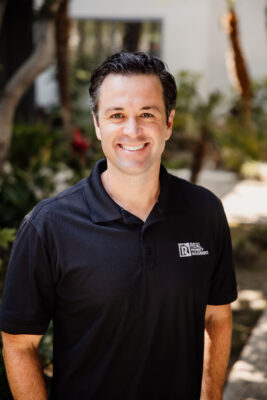
Miles Williams, Broker/Owner, RPM Southland
Pricing for a 12+ unit property is 4.9% flat, a different tier from the standard single-family and condo menu. The leasing fee is $399 flat, the setup fee is $0, and every owner is covered by three written guarantees: six-month tenant placement, a 29-day rental guarantee, and a 60-day satisfaction guarantee. Our AI scheduling agent handles showing requests 24/7 so tenant inquiries do not sit unanswered while an owner sleeps in another time zone, and property evaluations run every six to eight months with photos of every room and detector and filter checks documented in the owner portal. I founded RPM Southland in 2014, I have been managing ADUs in Long Beach for over five years, and we have been building SE LA County portfolios for over a decade.
Frequently Asked Questions
Does Title 25 Section 42 apply to my entire SE LA County portfolio or just one building?
Title 25 § 42’s resident-manager requirement applies per building, not per portfolio. It is triggered when a single apartment house reaches 16 or more units and the owner does not reside there. An owner with 12 units spread across three small buildings in Long Beach and neighboring cities may not trigger it at all, while an owner with one 16-unit building does, regardless of how many other doors they own elsewhere.
How often will I get a report if I own 12 or more units across multiple SE LA County cities?
Monthly owner statements through the owner portal at minimum, plus property evaluations every six to eight months with photos of every room, smoke and carbon monoxide detector checks, and HVAC filter checks. A portfolio-level report should break results out property by property, not just as a single blended total.
Who is legally required to be reachable if I live out of state and own a 16-unit building?
Under Title 25 § 42, a manager, janitor, housekeeper, or other responsible person must reside on the premises once a building reaches 16 apartments and the owner does not live there, which is always true for an out-of-state owner. Between 5 and 15 units, the requirement is a posted notice naming the owner or the owner’s agent in charge, and that name has to be someone actually reachable in California.
Does California’s statewide rent cap law apply the same way in every SE LA County city?
The statewide floor, AB 1482 (Civil Code §§ 1946.2 and 1947.12), applies to covered units everywhere in SE LA County. Some cities layer their own ordinance on top; Long Beach’s just-cause ordinance (LBMC § 8.99.020(e)) is one example, with relocation payments tiered by the reason for termination. Whether any other specific SE LA County city has its own additional ordinance should be verified directly rather than assumed, since local rules are amended city by city.
Should my property manager advise me on setting up an LLC for my SE LA County portfolio?
No. Entity structure and California nonresident tax filing are questions for a CPA and an attorney, not a property manager. A property manager’s role is to provide clean, property-by-property financial records your CPA can work from, not to recommend a specific ownership structure.
What happens to trust funds when I switch managers but keep the same building?
Rent and other trust funds are governed by Business & Professions Code § 10145, which covers a broker’s handling and disbursement of trust funds on the owner’s instruction, along with 10 CCR § 2832, which requires trust funds to be deposited within three business days of receipt. This is distinct from Civil Code § 1950.5, which applies only when the owner’s interest in the property itself changes hands through sale, assignment, death, or receivership, not a same-owner change of manager.
Own 12+ Units Across SE LA County From Another State?
Reporting is not a feature at this scale. It is the entire relationship. We manage over 730 properties across SE LA County, including Long Beach, with a 95% client retention rate, and every owner gets one dedicated account manager who can answer for the whole portfolio.
6-Month Tenant Guarantee
If your tenant leaves within 6 months, we replace them at no additional leasing fee.
29-Day Rental Guarantee
We fill your vacancy within 29 days or we manage for free until it’s filled.
60-Day Satisfaction Guarantee
Cancel within 60 days with no penalty if you’re not satisfied with our service.
Call us directly:
Miles Williams, Broker/Owner | CA DRE #01968830 | RPM Southland | Founded 2014
Turn This Guidance Into an Owner Plan
Bring the facts for your SE LA County property or portfolio. We will identify the questions RPM Southland can answer and the issues that belong with your attorney, CPA, lender, insurer, or other licensed adviser. Call (562) 270-1777.
This article is for informational purposes only and does not constitute legal, tax, or financial advice. Landlord-tenant regulations, local ordinances, and compliance requirements change frequently and vary by city. Consult a licensed California attorney and a licensed California CPA for advice specific to your situation and your specific properties. RPM Southland, a locally owned and operated franchise of Real Property Management, a Neighborly company, is not a law firm or accounting firm and does not provide legal or tax advice.
